Erik Krause · 4 October 2026
Mapping Connection Shifts in Startup Ecosystems via Precision Oversight Systems
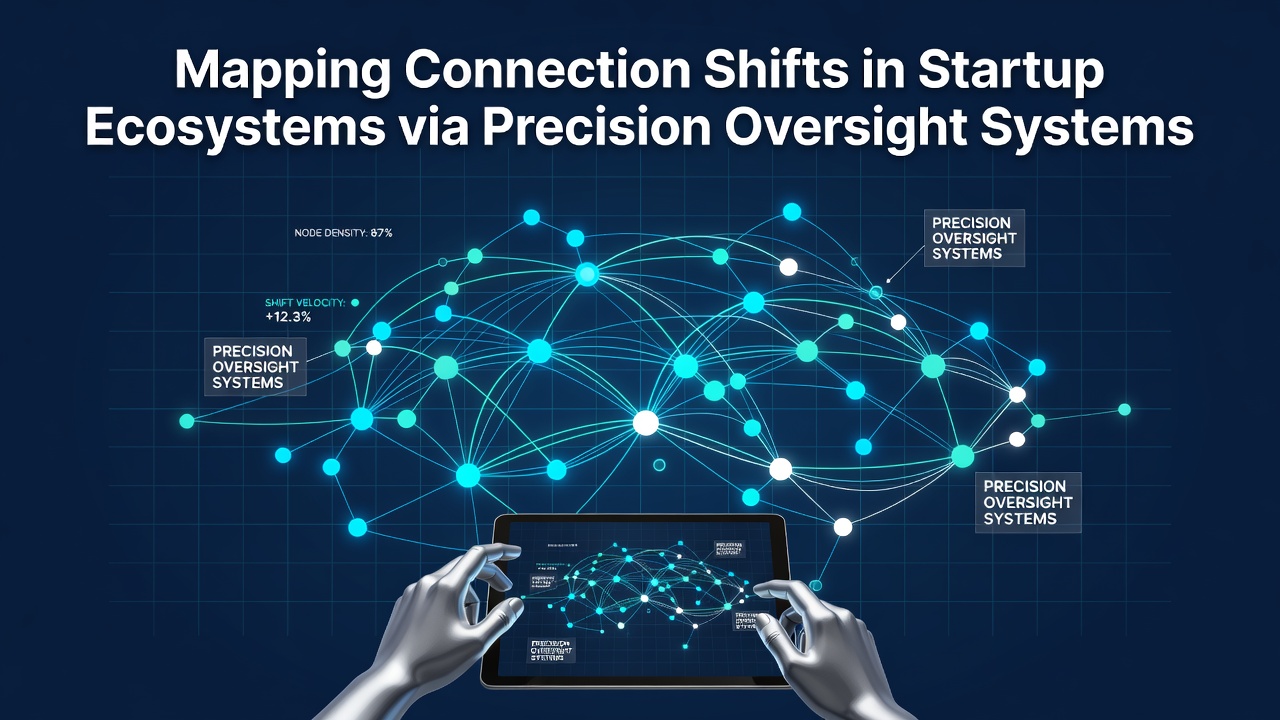
Precision oversight systems track changes in relationships that connect startups to investors, talent pools, suppliers, and research institutions, and these tools rely on continuous data streams from public records, transaction logs, and platform interactions to identify shifts as they occur. Observers note that such systems process large volumes of information through graph databases and machine learning models that flag alterations in node connections or edge weights, while data from October 2026 shows increased adoption among regional innovation agencies seeking to monitor ecosystem health without manual surveys.
Researchers have documented how these platforms aggregate inputs from venture capital filings, patent databases, and employment registries to build dynamic maps, and the resulting visualizations reveal clusters that form or dissolve over weeks rather than years. Studies indicate that algorithms detect early signals of connection decay, such as reduced co-investment patterns or talent migration away from a particular hub, before those trends appear in quarterly reports.
Core Components of Precision Oversight Platforms
Systems begin with data ingestion layers that pull structured and unstructured records from multiple jurisdictions, then normalize entries so that a startup listed under different names in separate countries receives consistent identifiers. Engineers apply entity resolution techniques to merge records, after which graph construction algorithms define relationships based on shared board members, joint funding rounds, or licensing agreements. Analysts at organizations such as the OECD have examined similar frameworks and reported that standardized identifiers improve cross-border accuracy by measurable margins.
Monitoring modules run scheduled queries that compare current graph states against baselines established weeks or months earlier, and alerts trigger when metrics such as betweenness centrality or clustering coefficients move beyond predefined thresholds. Integration with external APIs allows real-time updates from stock exchanges or regulatory filings, which keeps maps current even during periods of rapid market activity.
Applications in Funding and Talent Networks
Funding connection maps illustrate how capital flows redistribute when a major investor reduces commitments in one sector while increasing activity in another, and precision systems capture these reallocations through timestamped transaction data. Talent networks receive similar treatment as employment records and LinkedIn-style profiles feed into models that track founder movement between companies or universities, revealing whether certain ecosystems gain or lose experienced personnel over successive quarters.
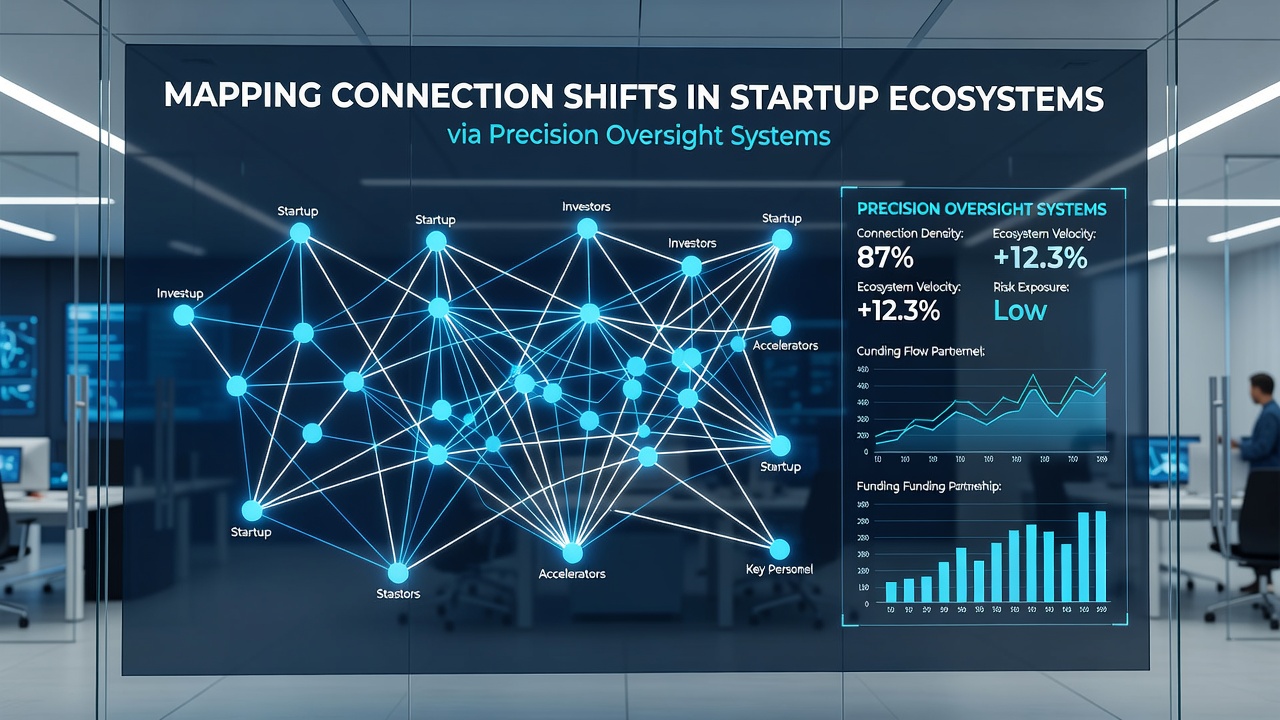
One longitudinal project coordinated by academic teams at Canadian institutions compiled employment and investment records spanning multiple provinces and identified recurring patterns where talent departed maturing startups for newer entrants within the same city, and those movements preceded measurable changes in local patent output. Parallel work by researchers using U.S. Census Bureau business dynamics data has confirmed that connection density correlates with survival rates during economic contractions.
Partnership and Supply Chain Visibility
Beyond capital and people, oversight platforms map supplier relationships and technology licensing agreements that bind startups to larger corporations, and changes in these ties often precede product roadmap adjustments or market exits. Data ingestion includes procurement notices and university technology transfer office disclosures, which supply the raw edges for the graphs. When a licensing link severs or a supplier switches allegiance, the system registers the modification and recalculates downstream effects on dependent nodes.
European research consortia tracking innovation clusters have applied comparable methods to automotive and cleantech sectors, noting that connection shifts detected in early 2026 aligned with subsequent adjustments in regional grant allocations. Such alignment allows policymakers to anticipate where support programs may need recalibration.
Technical Challenges and Mitigation Approaches
Data latency remains a persistent issue because regulatory filings arrive at uneven intervals across jurisdictions, and teams address this through imputation models that estimate missing values based on historical patterns. Privacy regulations further constrain the granularity of identifiable information, prompting developers to implement differential privacy techniques that preserve aggregate network statistics while protecting individual entities. Scalability testing conducted by infrastructure providers indicates that distributed graph databases can handle ecosystems containing tens of thousands of nodes with acceptable query response times.
Conclusion
Precision oversight systems continue to evolve through incremental improvements in data fusion and anomaly detection, and their outputs supply factual baselines that regional agencies and academic groups use to study startup ecosystem dynamics. Continued refinement of these tools depends on broader data access agreements and standardized reporting formats that reduce reconciliation overhead across borders.