Ines Keller · 6 September 2026
Strategies for Preserving Link Authority During Domain Ownership Transitions
Domain ownership changes create specific challenges for maintaining link authority, since search engines evaluate signals like backlink profiles and domain history during these shifts. Research indicates that abrupt changes in ownership often trigger re-evaluations by algorithms, which can lead to temporary or lasting drops in rankings if not handled carefully. Observers note that successful transitions rely on coordinated technical steps and communication with external parties holding links to the domain.
Key Risks During Ownership Changes
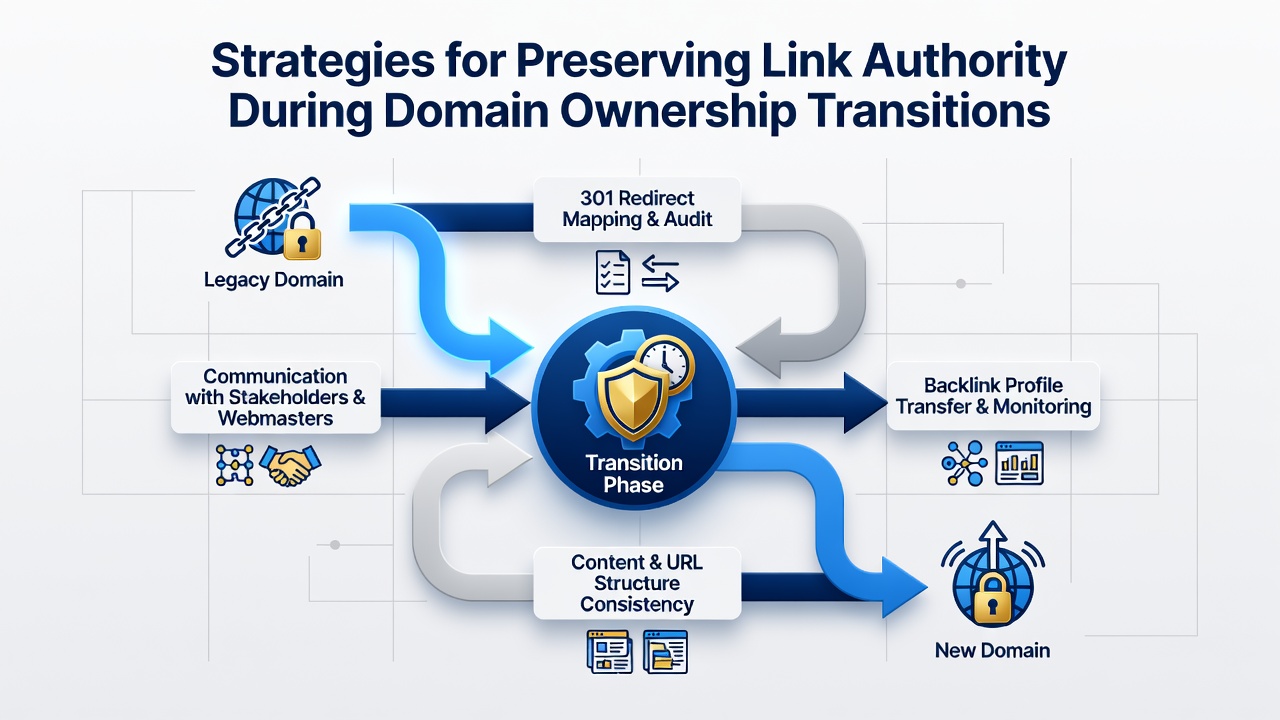
Link authority depends on accumulated backlinks and the domain's established trust signals, yet ownership transfers introduce variables such as DNS modifications and potential registrar switches that interrupt these signals. Data from industry reports shows that unmonitored transfers frequently result in lost indexing for key pages, while link equity fails to pass through if redirects are not implemented promptly. Those who study these patterns find that search engines may treat sudden shifts as signs of manipulation, prompting closer scrutiny of the domain's history.
Preparation Before the Transfer
Comprehensive audits of the backlink profile form the foundation of any preservation effort, since identifying high-value links allows owners to prioritize outreach and verify their status. Experts recommend documenting anchor text distributions and referring domains well in advance, because this data helps track changes post-transfer. People who manage these processes often discover that contacting link providers directly reduces the chance of links being removed after the domain changes hands, especially when new ownership raises questions about content continuity.
Technical preparations include setting up monitoring tools to capture baseline metrics on domain authority and organic traffic, while also preparing 301 redirect maps for all relevant URLs. According to resources from the Internet Corporation for Assigned Names and Numbers, proper registrar transfer procedures minimize downtime that could otherwise affect crawl budgets and link evaluation cycles. ICANN transfer guidelines outline steps that keep records intact throughout the process.
Execution During the Ownership Shift
Coordinating the actual transfer requires maintaining consistent DNS records until the handover completes, since interruptions here can cause temporary deindexing that impacts how search engines view link authority. Teams handling transitions report that using escrow services for the domain sale adds a layer of verification, ensuring both parties agree on redirect implementations before control passes fully. What's interesting is how simultaneous updates to WHOIS information and name server settings prevent mismatches that algorithms might flag as suspicious activity.
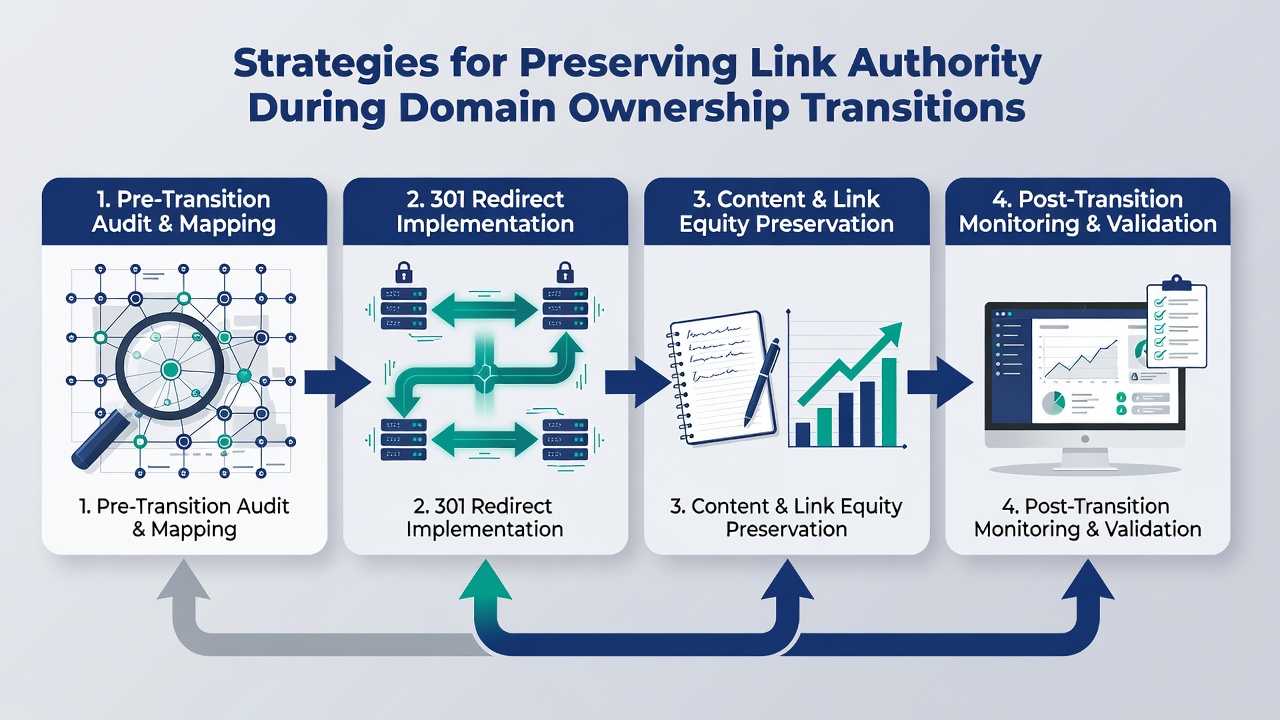
Communication wth webmasters who control incoming links remains essential at this stage, because transparent updates about the ownership change encourage them to retain or update references rather than remove them. Studies on domain migrations reveal that proactive outreach during September 2026, when new compliance requirements for certain registrars took effect, helped maintain link volumes in multiple documented cases. Those overseeing transfers emphasize testing redirect chains in staging environments first to confirm that link equity flows correctly without introducing chains that dilute authority.
Post-Transfer Monitoring and Adjustments
Once ownership stabilizes, ongoing tracking of backlink metrics through established tools reveals whether authority has carried over intact or requires intervention. Researchers have observed that re-submitting updated sitemaps and requesting re-crawls accelerates the re-evaluation period, allowing search engines to recognize the preserved signals sooner. In cases where certain links drop, follow-up notifications to referring sites often restore them when the new owner demonstrates content alignment with previous topics.
Additional steps involve auditing internal links and on-page elements that might have shifted during migration, since these contribute to overall topical authority alongside external backlinks. Evidence from migration analyses indicates that combining redirect maintenance with content updates preserves more ranking power than redirects alone, particularly for domains with diverse link sources spanning multiple regions. Observers note that periodic reviews every few weeks after the transfer catch emerging issues before they compound.
Conclusion
Effective preservation of link authority during domain ownership transitions centers on methodical preparation, precise technical execution, and sustained monitoring afterward. Data shows that domains following structured approaches retain higher portions of their pre-transfer equity compared with those that do not. Organizations and individuals who integrate these elements into their processes position the domain for continued performance once control changes hands.